Money Smarts Blog
Tax Season Scams: A Fraud Investigator’s Take
Jan 22, 2026 || By Jennifer Laud, Fraud Investigator
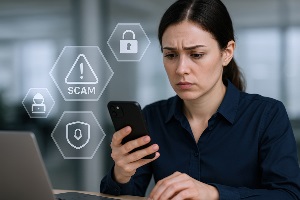
Tax season has a way of sneaking up on us. One minute you’re feeling responsible because you found your W-2, the next minute you’re knee-deep in passwords, portals, and a mysterious email that says you’re getting a “bigger refund than expected.” 🚩
Let me introduce myself. I’m Jennifer, a Fraud Investigator here at IH. Before this role, I spent years as a police officer with the Moline Police Department. Back then, I chased down bad actors on the streets. Now, I track them through screens, keyboards, and sketchy emails. Different uniform, same mission.
And during tax season? Fraudsters are working overtime.
Why Tax Season Is Prime Time for Scams
Scammers love tax season for one simple reason: urgency + money = distraction. People are expecting refunds, communicating with unfamiliar websites, and responding quickly because deadlines feel very real.
We see tax-related scams show up in a few familiar disguises:
- Fake IRS emails or texts claiming there’s a problem with your return
- “Unexpected refund” messages asking you to verify your account info
- Phone calls pretending to be the IRS or a tax service demanding immediate payment
- Fraudsters filing tax returns using stolen personal information
- Refund deposits that look legitimate, but are tied to identity theft
And here’s the thing I want you to hear clearly: the IRS does not slide into your DMs. Ever.
Red Flags I Spot Right Away
Both as a former police officer and a fraud investigator, patterns matter. These are the tells that make my fraud radar light up:
- Messages that create panic or pressure you to act immediately
- Requests for personal information, login credentials, or one-time passcodes
- Links that look “almost” right, but not quite
- Calls demanding payment via gift cards, wire transfers, or crypto
- Anything that feels off, rushed, or too good to be true
Trust your instincts. They’re better than you think.
How to Protect Yourself (and Your Refund)
Here’s the good news: a few smart habits go a long way.
- File early when you can. It reduces the window for someone else to file using your information.
- Verify before you click. If you get a message claiming to be from the IRS or your financial institution, stop and contact us directly using a trusted phone number.
- Use strong, unique passwords for tax software and financial accounts. Bonus points for enabling multi-factor authentication.
- Never share one-time passcodes. Not with anyone. Not ever. Not even if they sound convincing.
- Watch your accounts closely during tax season for unfamiliar deposits or withdrawals.
- And if something doesn’t feel right, reach out. We would much rather check on a false alarm than clean up real fraud later.
From the Street to the Screen
Back when I wore a badge with Moline PD, fraud didn’t always look like it does today. But the goal hasn’t changed. Scammers are still counting on people being distracted, rushed, or intimidated.
At IH, my job is to help stop fraud before it causes real damage. Your job is simply to pause, ask questions, and let us be your backup.
If you ever have concerns during tax season or beyond, don’t hesitate to contact us. We’ve got your back.
Stay sharp out there!


